God We Need You: A Designer’s Embroidery Review
As a designer who has spent countless hours digitizing and stitching everything from delicate baby onesies to heavy-duty workwear, I have learned that not all graphics translate well into thread. Some designs look stunning on a screen but become a tangled mess under the needle. When I first pulled up the God We Need You design, my immediate reaction was one of cautious optimism. The phrase itself carries weight—it is spiritual, urgent, and deeply personal. But does the visual execution support that emotional gravity when it becomes a physical, stitched object? After reviewing the file structure and imagining its application across various textiles, I am ready to share my practical assessment for fellow embroidery designers, Etsy sellers, and craft entrepreneurs.
First Impressions: Mood and Visual Personality
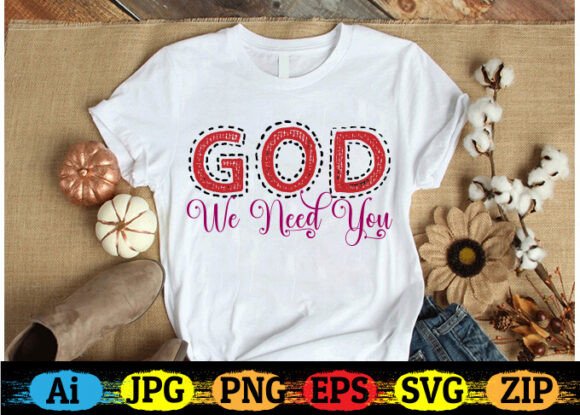
The first thing that strikes you about God We Need You is its directness. There is no excessive ornamentation or distracting clip-art elements competing for attention. This minimalism is a strength in embroidery, where less is often more. The layout suggests a design that relies heavily on typography, which means the choice of font and spacing is critical. In a digital format, such as the included editable AI, SVG, and EPS files, you have the freedom to tweak kerning or adjust the scale before converting it into a machine embroidery design. This flexibility is vital because what works for a large back-print on a sweatshirt will not necessarily work for a small chest logo on a polo shirt.
The mood created by this text is one of solemn reliance. It fits naturally into categories like faith-based apparel, community group merchandise, or supportive gifts for those going through difficult times. Visually, it feels grounded. It does not scream for attention with neon colors or chaotic shapes; instead, it invites a moment of reflection. For a handmade product, this emotional resonance is what drives sales. Customers are not just buying a shirt; they are buying a statement of belief or solidarity.
Real-World Application: From Screen to Stitch
To truly evaluate God We Need You, I mentally placed it into several real-life scenarios. Imagine preparing a custom embroidered tote bag for a church group or a community outreach event. Tote bags are typically made of canvas or heavy cotton, which provides a stable surface for stitching. Here, the design would likely perform well, provided the stitch density is adjusted to prevent puckering. The bold nature of the text ensures readability from a distance, making it effective for group identity.
Consider another scenario: a personalized gift for a friend facing a health challenge. A soft, high-quality sweatshirt with this phrase embroidered on the left chest offers comfort without being overly intrusive. In this context, the design acts as a quiet reminder of support. However, this application requires careful attention to thread choice. A matte rayon or polyester thread in a neutral tone like navy, charcoal, or deep burgundy would enhance the serious yet hopeful tone of the message. Avoid overly shiny threads that might detract from the sincerity of the words.
For Etsy sellers and small shop owners, this design also holds potential for home decor. Picture it stitched onto a pillow cover or a kitchen towel. These items require different handling than apparel. A kitchen towel, often made of thinner fabric, demands a lighter touch. If the original graphic is dense, you may need to simplify the stitch pattern to avoid creating a stiff, cardboard-like patch on the fabric. This is where having access to the editable vector files (AI, SVG, EPS) becomes invaluable. You can modify the design elements before digitizing to ensure the final embroidery file respects the fabric's drape and texture.
Technical Considerations and Fabric Compatibility
While the concept is strong, the technical execution determines the quality of the finished product. One major area of concern with text-based designs is legibility at smaller sizes. If you plan to use God We Need You on a cap or a baby item, you must verify that the letterforms remain distinct. Tiny serifs or intricate connections between letters can easily get lost in satin stitches or fill stitches if the resolution is not high enough. I strongly advise testing the design on scrap fabric before committing to a final piece. Check how the threads lay on both woven and knit fabrics.
Fabric texture plays a significant role here. On textured fabrics like terry cloth or fleece, fine details can disappear. In such cases, increasing the stitch width or using a contrasting underlay can help define the edges. Conversely, on thin or stretchy fabrics, proper stabilizer selection is non-negotiable. A cut-away stabilizer is usually best for knits to provide ongoing support, while a tear-away might suffice for stable wovens. Without the right foundation, even the best-designed graphic can pull and distort, ruining the professional look of your handmade product.
Dark fabrics present another challenge. If you are stitching white or light-colored thread on a black garment, you must ensure adequate coverage. This often means using a denser fill stitch or adding an underlay stitch to prevent the background fabric from showing through. The transparent PNG included in the package allows you to mock up these color combinations quickly. I recommend creating black-and-white mockups to check contrast levels before you thread your machine. This simple step can save you from unraveling hours of work due to poor visibility.
Enhancing Product Value and Brand Consistency
From a business perspective, God We Need You offers versatility. It can be part of a broader collection of faith-based T-Shirt Designs or standalone Graphics for various print-on-demand services. However, for embroidery businesses, the perceived value is higher because of the tactile quality of the stitch. A well-executed embroidery project signals craftsmanship and durability. When customers see clean, consistent stitching with no loose threads or puckering, their trust in your brand increases.
Consistency is key. If you are building a boutique brand around meaningful, inspirational items, ensure that this design aligns with your other offerings. Use similar thread palettes and placement strategies across your product line. For example, if you always place text on the lower left hem of your tote bags, stick to that convention. This creates a recognizable signature style that buyers come to appreciate. The editable nature of the provided files means you can adapt the design to fit your specific brand guidelines, whether that involves changing the font weight or adjusting the overall scale.
Practical Notes for the Embroidery Designer
Before you load this design into your machine, take a moment to review the technical specs. The package includes High Quality JPG, Editable AI, SVG, EPS, and Transparent PNG files. Note that these are graphic formats, not native embroidery files like PES or DST. You will need to digitize the design or convert it using your preferred software. During this process, pay close attention to stitch density. Too dense, and you risk damaging delicate fabrics; too sparse, and the backing will show. Always test on a similar fabric scrap first.
Check the licensing terms carefully. While the product description mentions commercial use potential, always confirm whether you can sell finished items or if there are restrictions on mass production. For small shop products and craft fair items, standard commercial licenses usually apply, but clarity protects your business. Finally, consider the hoop size. Ensure your design fits comfortably within your available hoops without requiring excessive re-hooping, which can lead to misalignment.
In conclusion, God We Need You is a compelling design with strong emotional appeal. Its success in your shop will depend on your technical diligence—choosing the right fabric, thread, and stabilizer, and respecting the limitations of the medium. With careful execution, it can become a standout piece in your portfolio of custom apparel and personalized gifts.